July 6, 2010

Former Player Named Head Men's Tennis Coach at South Carolina

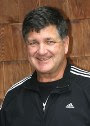
Josh Goffi has been named the Head Men’s Tennis Coach at the University of South Carolina. He’s the 27th College Coach to have either been a player or an assistant coach with me while I coached at Clemson.


This is from ClemsonTigers.com:

A Charleston, S.C., product, Goffi was named 2010 ITA Carolina Region Assistant Coach of the Year while serving as an assistant coach at Duke University.

Goffi joined the men's tennis staff at Duke in July 2008. Prior to his two-year stint at Duke, Goffi was an assistant coach with the Arizona State women's team for two seasons. He was named Wilson/ITA West Region Assistant Coach of the Year in 2008.

After completing a standout collegiate career at Clemson in 2001, Goffi played on the ATP Tour through September 2005. During that stretch, he claimed a pair of singles titles and 18 doubles championships. Ranked as high as No. 480 in the world in singles, he scored six wins over player ranked in the top 100. In doubles, his ranking peaked at No. 121 behind three wins over top-10 tandems. Goffi also represented Brazil in the 2004 Davis Cup.

As a three-time All-ACC selection for the Tigers, Goffi was the ACC's singles and doubles champion in 1999 and was a member of the 2000 and 2001 NCAA All-Region teams. He rose as high as No. 9 in the singles national rankings and No. 3 in doubles while leading Clemson to three NCAA Tournament appearances and a spot in the 2001 ACC Tournament final.

Goffi graduated from Clemson in 2001 with a bachelor's degree in financial management. He is married to the former Nancy Augustyniak, a former Clemson University women's soccer player and also a professional soccer player who played for the Atlanta Beat. She also spent time in United States national team training camp in 2001 and 2002. Goffi's father, Carlos, is an internationally recognized tennis coach who was named 1991 World Coach of the Year.

June 7, 2010

Two Different Personalities

Two different personalities prevail in competitive sports: 1. The diligent, hard worker. 2. The person who is loose-as-a-goose. The former is obsessive and driven. He practices skills again and again until he does them correctly. The latter is a cocky competitor who thinks he can do it all.

Most coaches love to work with the first kind - the driven temperament athlete. One problem, however, is that on game day this athlete usually tries too hard and often chokes.

Though cocky athlete may give the appearance that he will pull off a win, because he may lack the foundation of repetitive work, he often is not able to come thorough in the clutch. Nor can he be counted on for consistent performances.

Sports psychologists Bill Moore explains that the arousal levels for practice days and match days should not be the same. It would best if a player's personality were a combination of the two personalities - an ideal balance of someone who is driven on practice day - doing everything possible to polish his skills - and someone who, on game day, is able to approach the competition with a confident attitude. But most athletes tend to be one way or the other.

On game day, it is best to use shots that are your medium risk shots - those with which you are comfortable. Attempting to make high risk shots over and over invites inconsistency.

When preparing for a big match, some sayings to remember are:

"Regular stuff is good enough."

"Try softer, not harder."

"Desire a total release performance more than you desire to win."

Even if an athlete knows what level of emotional arousal produces the best performance, he or she may not be able to compete comfortably at that level. Each athlete must find his or her unique zone of emotional balance for competition.

Nick Saban


I like this speech - right on the mark on the importance of process over product. It is a great approach in trying to accomplish great things in a very difficult arena.


Coach Nick Saban - Complete Speech January 25, 2010 from The Pacific Institute on Vimeo.

May 10, 2010

Ed Dickson to Teach at my T3 Summer Camps


I’m pleased to announce that, Ed Dickson - a great, veteran Division I head tennis coach - will be a teacher at my 2010 Total Tennis Training Summer Camps in Lexington, Sumter, and Brevard.

I spent several of my earlier coaching years side-by-side with Ed. We both worked for my mentor Harry Hopman and became similarly inspired to coach and to teach. Ed helped me get off of the ground at Clemson, as we coached two ACC championship teams together. He spent the next 25 years leading programs at Purdue, West Virginia and Austin Peay.

He’s a great man and a great tennis teaching mind. I am looking forward to reuniting with him in our tennis teaching work.

May 5, 2010

Playing Against a Player with a Different Style

One of the best ways to determine the strategy to use against an opponent is by using player match-up charts. Simply, I give my own player a basic rating from 0 to 10 (10 being the best) in the three playing style areas: Delayed Pressure, Quick Pressure, and Countering Quick Pressure.

Of course, the standards for rating are relative based on the level that a player is participating. Each player has strengths and weaknesses that are more directly related to his or her style of play than proficiency in each particular stroke. By matching up your strengths and weaknesses against an opponent's, a style of play for the match can be determined. You want to decide on a strategy that accents your strengths but also forces the opponent into his weaknesses. This figure shows how this technique can be used effectively.


Sample Strategy: In this mach my opponent is a great counterpuncher, but he is weak as an attacking player and only fair when it comes to creating pressure while working the ball off the ground in the backcourt. He basically needs a target or his weapons are not that effective. My game revolves around my attacking ability, but because my opponent likes targets, I'll do my best to minimize my targets until the time is appropriate. I will take away his first exchange strength of returning serve by not serving and volleying as much as I would normally like. I will instead use more of what is often referred to as "Wide and Glide" tactics, serving and attacking the second ball. In this case I want to create pressure with the serve. This will take away the opponent's ability to hurt me with his great return of serve. Because he doesn't like to play long points and wants a quick target, my objective will be to make him play long points whenever possible, especially on his service game. This will hopefully frustrate him into going to the net more that he is comfortable with; therefore, he will have to use a weak part of his game. If my opponent starts to falter and become frustrated, then I pick up the quick attack and dominate his game.

While there are many strategies that can be used to win a match, the most basic and most important ones to remember are:
1) Get locked into the way that you want to play and 2) Try to make your opponent play in a way that he is not comfortable. One of the most common mistakes in this strategy is, while trying to throw the player off of his style, not sticking to your own strengths.

A Winning Tennis Player is Comfortable at Being Uncomfortable.

March 7, 2010

My New Position


From Bob Larson's Tennis News (www.TennisNews.com)


Kriese Joins Washington, DC Junior Tennis Champions Center


The Junior Tennis Champions Center announced that legendary Clemson Tigers Head Coach Chuck Kriese has joined its staff as the Senior Director of Competition. Kriese coached the Clemson men’s tennis team from 1975-2008 finishing his career with an ACC record 616 wins, 11 ACC championships, and four National Coach of the Year awards.


Kriese brings significant expertise to the JTCC coaching staff. He is the author of numerous coaching and training books including Coaching Tennis, Total Tennis Training, and Winning Tennis. He joins Vesa Ponkka, Senior Director of Tennis, and his former Clemson player Frank Salazar, Senior Director of High Performance, on JTCC’s senior management team. Kriese will work with junior players in JTCC’s Champions Program, with emphasis on competitive development, matchplay strategy, and tournament preparation.


In addition to his role at JTCC, Kriese will remain the Technical Director for the Southeast Asia Tennis Federation, where he oversees player development in nine Asian countries. These players will train at the Junior Tennis Champions Center when they are in the United States and Kriese will continue to coach Noppawan Lertcheewakarn, winner of four junior Grand Slam tournaments.


The JTCC offers training to children between the ages of four and 18 on a part- and full-time basis. Located in the Washington, DC, metropolitan area, students can choose from weekly group clinics to intense, full-time training programs including on-site academic instruction.

The Black Door


He who has conquered doubt and fear has conquered failure. -- James Allen

In some of my writings and speeches I have made reference to "The Black Door." I was first told the story by Bill Brown, one of my former assistants at Clemson. For all of those who haven't heard the story, or how it applies to sports (and life), here it is:

A Persian General has the enemy spy placed against the wall as the firing squad take aim and readies themselves to shoot upon the given order.
He slowly walks up to the spy and says, "I'm going to give you a choice about your fate. You can take the firing squad that is ready to carry out your sentence, or you can take what waits for you behind that Black Door."
The spy asks, "What is behind the Black Door?"
The General replies, "I can't tell you. It is your choice."
The spy starts to imagine the possibilities of a long and painful death. Perhaps there are tigers on the other side of the door that will tear him to shreds. Perhaps it will be snakes or another frightening death. After some contemplation, he confirms to the general that he is ready to take the quick and simple method of execution or the firing squad. And the execution is carried out swiftly.
Afterward, a young corporal who had witnessed the whole thing walks up to the General and asks, "What is behind the black door?"
The General replies, "It's Freedom. But no one has ever chosen it. It seems that most people choose a death that they are familiar and more comfortable with than to risk the unknown."

I used to have a sign in my locker room that read, "Most want comfort more than they desire excellence." Another sign read, "To get all, you must give all everyday in your training, and be willing to risk all every time that you compete." Players must be always aware that giving all in practice is much easier than risking all when they compete.

As this diagram shows, when you go through the Black Door, though you may fail in the process, but you'll never have to go though the initial passage again.


Gradually, as you see Black Doors for what they are, new confrontations become less intimidating.